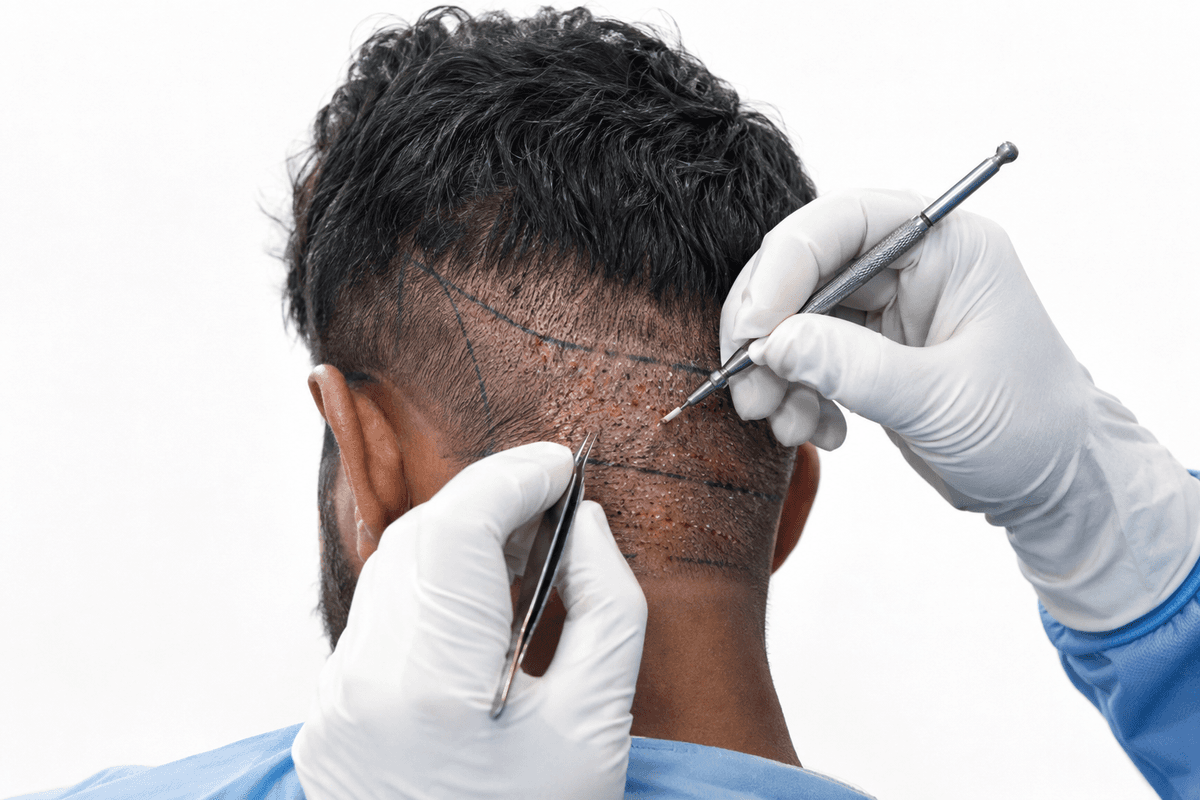
Performed by Dr. Ramanjanyalu at Dr Rams Skin Remediez
A hair transplant is a surgical procedure that takes hair follicles from areas where hair grows well—usually the back or sides of the head—and moves them to areas where hair is thin or absent. Dr Rams Skin Remediez offers this procedure to help address pattern hair loss and other forms of permanent hair thinning. The transplanted follicles are expected to continue growing hair in their new location.
We believe in honest, upfront disclosure so you can make an informed decision.
A step-by-step look at what happens during this procedure.
The dermatologist identifies and prepares the donor area, usually at the back or sides of the scalp where hair is thick and permanent.
Hair follicles are removed either as individual units (FUE technique) or as a strip of scalp tissue (FUT technique), depending on the method chosen.
The harvested follicles are carefully examined and prepared under magnification to keep them healthy for transplantation.
Tiny incisions are made in the areas of the scalp where hair is thinning or absent, following the natural direction and angle of hair growth.
Each prepared follicle is placed into the recipient sites. The process is repeated until the planned number of grafts is transplanted.
A structured, patient-first approach from first consultation to full recovery.
The dermatologist examines your scalp, hair density, donor area quality, and discusses your goals to plan the procedure.
Based on your hair type and the extent of hair loss, the appropriate extraction and transplantation method is chosen.
The procedure is performed under local anaesthesia in a sterile setting, with careful attention to graft survival and natural appearance.
You receive clear instructions on scalp care, activity restrictions, and follow-up appointments to monitor healing and hair growth.
What to expect at each stage of your recovery journey.
The scalp may be tender, swollen, and bandaged for the first few days. Pain is usually mild and managed with prescribed medication. You will need to sleep with your head elevated and avoid touching the grafts.
Scabs form around the transplanted follicles and gradually fall off. You can usually resume desk work within a week. Strenuous activity, sweating, and direct sun exposure should be avoided.
The transplanted hair typically sheds within the first month, which is normal. New growth starts around three to four months, and the hair continues to thicken and mature over the following months. Full results are usually visible by one year.
Hair transplant aims to restore hair in thinning or bald areas with a natural appearance and hairline. The results depend on the quality of donor hair, the skill of the procedure, and individual healing.
The transplanted follicles are taken from areas genetically resistant to balding, so they are expected to continue growing for life. However, native hair around the transplanted area may continue to thin over time.
A hair transplant does not stop hair loss in untreated areas. Additional sessions or medical treatments may be needed in the future to maintain overall hair density.
The final density depends on how many grafts can be safely transplanted and the characteristics of your donor hair. It may not achieve the same fullness as your original hair.
The right choice depends on your diagnosis, risks and circumstances — discussed with you at your consultation.
Topical minoxidil or oral finasteride may slow hair loss and promote regrowth in some people with pattern baldness. These are often considered for those not ready for surgery or as maintenance after a transplant.
PRP injections into the scalp may stimulate hair follicles and improve hair thickness. It is sometimes used alone or in combination with a transplant, depending on the pattern and cause of hair loss.
Wigs, hairpieces, or scalp micropigmentation can provide the appearance of fuller hair without surgery. These may be chosen by people who prefer a non-invasive option or who are not suitable candidates for transplant.
Let's clear up some of the most common myths about hair transplant.
Get a personalised assessment from an experienced specialist. Understand your options, ask your questions, and decide with confidence.