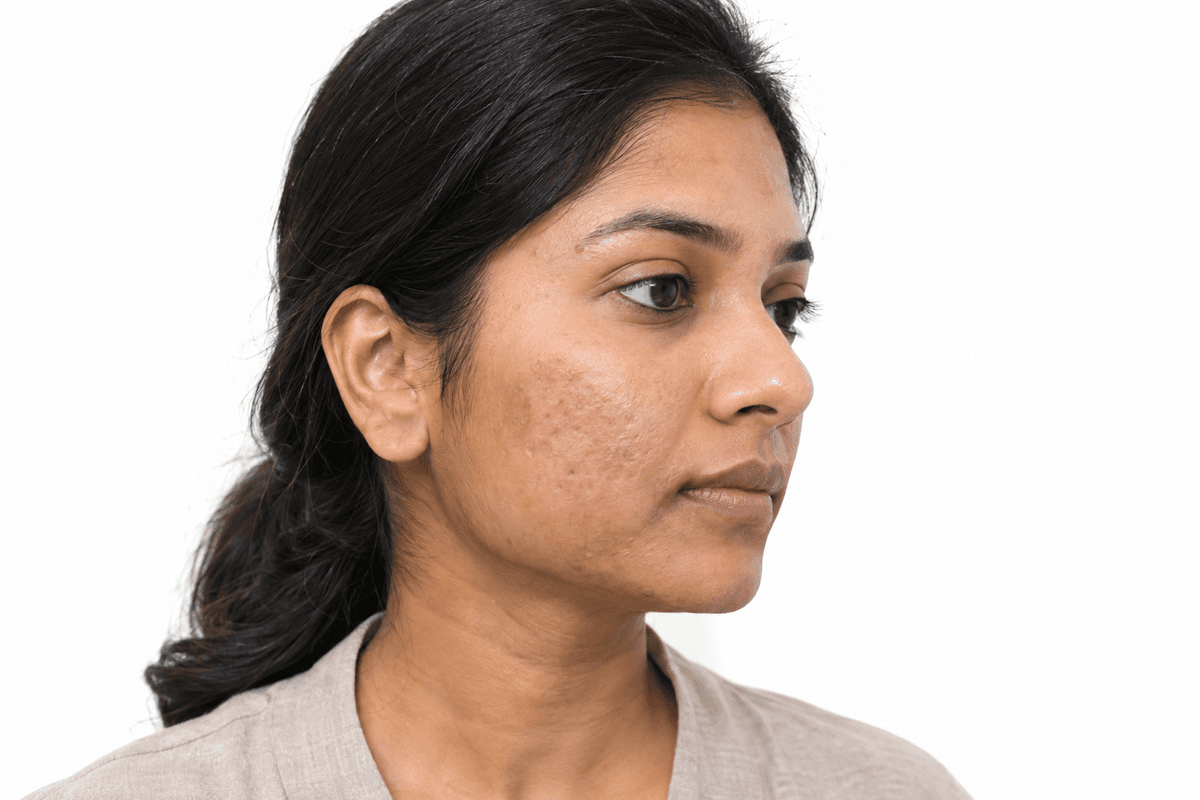
Treated by Dr. Ramanjanyalu at Dr Rams Skin Remediez
Acne scars are permanent marks left behind after acne heals. They develop when inflamed acne lesions damage the deeper layers of skin. The body attempts to repair this damage, but sometimes produces too much or too little collagen, resulting in different types of scars. Dr Ramanjanyalu evaluates each patient's scarring pattern to recommend appropriate treatment options.
Depressed scars that sit below the surrounding skin. They form when the skin produces too little collagen during healing. This category includes ice-pick, boxcar, and rolling scars.
Raised scars that remain within the boundary of the original acne lesion. They occur when the body produces excess collagen during the healing process.
Flat darkened marks left after acne heals. Though not true scars, they are often grouped with scarring. They result from increased melanin production triggered by inflammation.
Multiple factors can contribute to the development and progression of this condition.
Recognising the signs early gives you more treatment options.
Assessment begins with a clinical examination of the scars, noting their type, depth, and distribution. Not every patient requires additional investigations; dermoscopy or imaging may be considered where needed to plan treatment.
From conservative to surgical — we always start with the least invasive option first.
A structured, patient-first approach from first visit to full recovery.
Dr Ramanjanyalu examines the type, depth, and distribution of scars to understand the individual's scarring pattern and skin characteristics.
A treatment approach is discussed based on the scar type, skin tone, and the patient's goals. Conservative options are considered first.
The chosen treatment is carried out with attention to technique and safety. Patients receive clear instructions on what to expect during and after each session.
Progress is reviewed at follow-up visits. The treatment plan may be adjusted based on how the skin responds and the individual's tolerance.
What to expect at each phase of recovery.
Redness, mild swelling, or sensitivity may occur depending on the treatment used. Individual healing varies, and specific aftercare guidance is provided for each procedure.
Skin begins to settle over days to weeks. Sun protection and gentle skincare are important during this period. Visible changes start to appear gradually.
Collagen remodelling continues over months. Final results take time to emerge, and multiple sessions may be needed. Maintenance care supports ongoing skin health.
Treatment may reduce the depth and visibility of scars, leading to smoother skin texture. Complete removal of scars is rarely possible.
Dark marks and uneven tone may fade with appropriate treatment. Response varies with skin type and the severity of pigmentation.
Each person's skin heals differently. Some scars respond better to treatment than others, and realistic expectations are important.
Results are not always permanent. Ongoing skincare and occasional repeat treatments may be necessary to maintain improvements.
Acne scars do not fade significantly on their own once they have fully formed. Without treatment, the texture and appearance of scarred skin typically remain unchanged. While scars do not worsen or cause physical harm, they may affect self-esteem and how a person feels about their appearance.
Consider seeking care if acne scars affect your confidence or if you notice persistent changes in skin texture after acne has healed. Early consultation in Kasturi Nagar allows for a thorough assessment and discussion of suitable options. Treatment is generally more effective when started before scars become deeply set.
Early treatment means more options and better outcomes. Book a consultation to understand your condition and explore the right path forward.