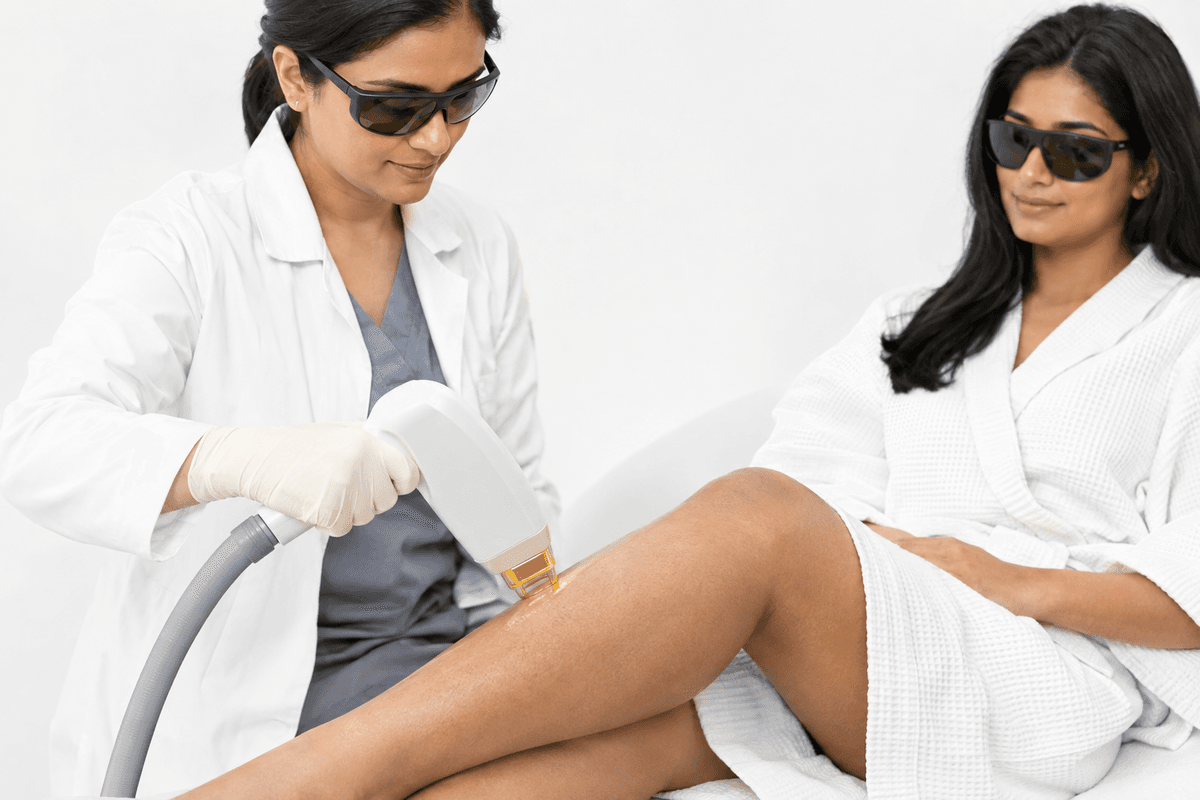
Performed by Dr. Ramanjanyalu at Dr Rams Skin Remediez
Unwanted hair removal addresses excess hair on the face, underarms, legs, bikini area or other body parts. Treatment options include laser therapy, intense pulsed light (IPL), electrolysis and other methods. At Dr Rams Skin Remediez, Dr Ramanjanyalu evaluates your skin type, hair colour and medical history to determine which approach is suitable for you.
We believe in honest, upfront disclosure so you can make an informed decision.
A step-by-step look at what happens during this procedure.
Laser or intense pulsed light is directed at the treatment area. The pigment in the hair shaft absorbs the energy.
The absorbed energy converts to heat, which travels down the hair shaft to the follicle at the root.
The heat damages the hair follicle and its growth structures, impairing its ability to produce new hair.
Treated hairs fall out over the following days to weeks as the damaged follicles release them.
Because hair grows in cycles and only hairs in the active growth phase respond well, multiple sessions spaced weeks apart are needed to target different growth cycles.
A structured, patient-first approach from first consultation to full recovery.
Dr Ramanjanyalu examines your skin type, hair characteristics and medical background to choose the appropriate device settings and treatment plan.
The treatment area is cleansed, and a topical numbing cream may be applied if needed. Protective eyewear is provided when treating areas near the face.
The handpiece is passed over the skin, delivering controlled pulses of light or laser energy. A cooling device or gel may be used to protect the skin surface.
You receive specific instructions on caring for the treated skin, managing any redness or swelling, and scheduling follow-up sessions.
What to expect at each stage of your recovery journey.
You can return to most daily activities right away. The treated area may look sunburned, with redness and mild swelling that usually fades within hours to a few days.
Avoid sun exposure, hot baths, saunas and vigorous exercise that causes heavy sweating for a few days. Use gentle cleansers and apply sunscreen as directed.
Hair shedding occurs gradually. New hair may grow between sessions from follicles in different growth phases, which is why repeat treatments are scheduled. Individual timelines and response vary.
Most people notice a gradual decrease in hair density and thickness over the course of several sessions. Results vary by individual, and some hair may regrow over time.
Hair removal is often long-lasting but not always permanent. Hormonal changes, age or other factors can reactivate some follicles, requiring occasional touch-up sessions.
Laser and light-based methods work best on dark hair with light skin, because the contrast helps target the pigment. Very light, grey or red hair may not respond well.
If excess hair is due to a hormonal imbalance or medical condition, the procedure reduces visible hair but does not treat the root cause, which may require separate management.
The right choice depends on your diagnosis, risks and circumstances — discussed with you at your consultation.
These remove hair at the skin surface and are temporary, requiring frequent repetition. They may be preferred if you want to avoid the cost or commitment of multiple sessions, or if your hair colour or skin type is not suited to light-based methods.
These pull hair out from the root and provide longer-lasting smoothness than shaving, though hair regrows. They may be chosen if you prefer periodic salon visits over device-based treatments.
This method uses a fine probe inserted into each follicle to destroy it with electrical current. It can work on all hair colours and skin types but is more time-consuming. Choice depends on the area to be treated, your preferences and clinical suitability.
Let's clear up some of the most common myths about unwanted hair removal.
Get a personalised assessment from an experienced specialist. Understand your options, ask your questions, and decide with confidence.