Treated by Dr. Ramanjanyalu at Dr Rams Skin Remediez
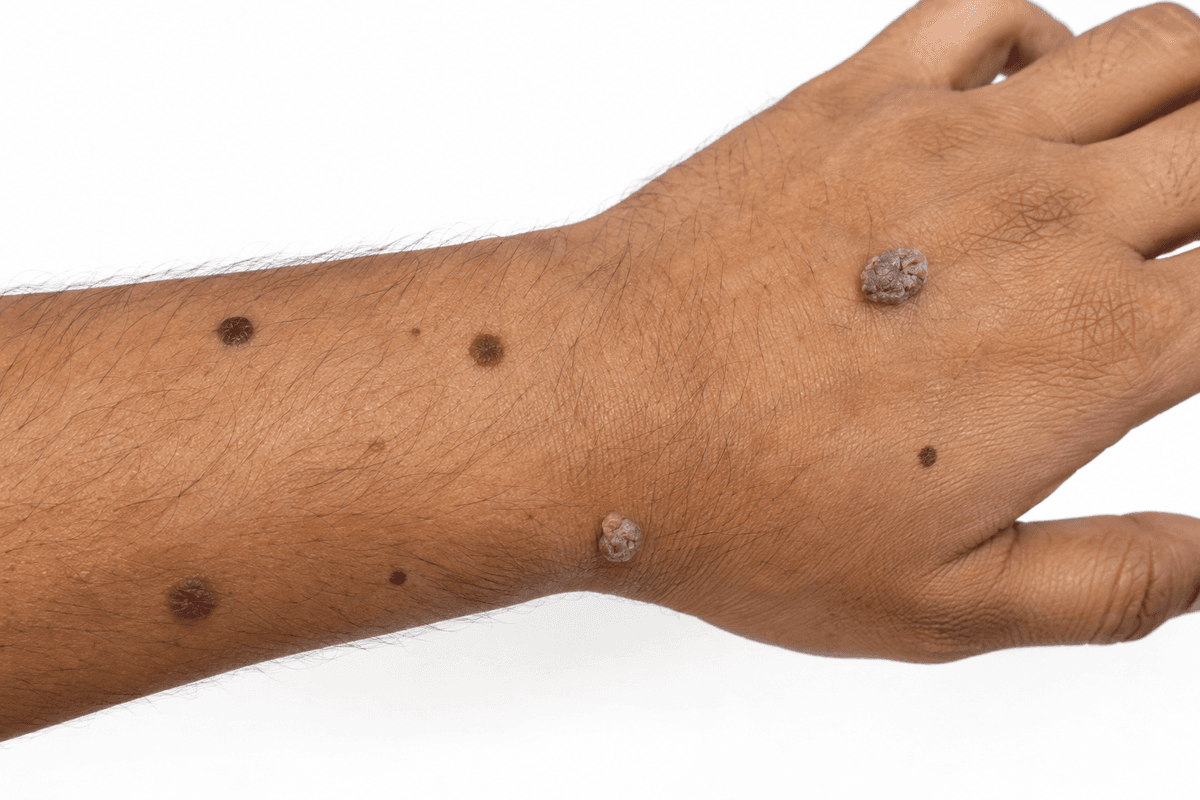
Moles and warts are common skin growths affecting many individuals in Bengaluru and across all age groups. Moles are clusters of pigmented cells that appear as brown or black spots, while warts are caused by viral infections and present as rough, raised bumps. Both conditions can affect appearance and confidence, though most are benign. At Dr Rams Skin Remediez, Dr Ramanjanyalu provides expert dermatological assessment and personalized treatment for safe and effective removal of these skin lesions.
Regular pigmented spots that are typically brown, round or oval, and appear anywhere on the body. Usually develop during childhood and adolescence, remaining stable throughout life. Most are harmless but require monitoring for changes in size, shape, or color that might indicate malignancy.
Rough, raised growths caused by human papillomavirus (HPV) infection, commonly appearing on hands, fingers, and around nails. They have a cauliflower-like surface texture with tiny black dots representing clotted blood vessels. Highly contagious through direct contact or contaminated surfaces.
Warts occurring on the soles of feet, growing inward due to pressure from walking and standing. They can be painful and feel like walking on a small stone. Often mistaken for calluses but distinguished by their characteristic black dots and interruption of normal skin lines.
Multiple factors can contribute to the development and progression of this condition.
Moles and Warts develops gradually. Recognising symptoms early gives you more treatment options.
From conservative to surgical — we always start with the least invasive option first.
A structured, patient-first approach from first visit to full recovery.
Dr Ramanjanyalu conducts a thorough clinical examination using advanced dermatoscopy to evaluate each mole or wart, assessing size, shape, color, borders, and any suspicious features. Digital imaging may be used to document lesions and track changes over time, ensuring accurate diagnosis and appropriate treatment planning.
Based on the type, location, size, and nature of the skin growth, our team develops a customized treatment strategy tailored to your specific needs and cosmetic goals. We discuss all available options, expected outcomes, recovery timelines, and address any concerns to ensure you make an informed decision about your care.
Dr Rams Skin Remediez employs state-of-the-art equipment and sterile techniques to perform the chosen treatment with maximum precision and safety. Whether cryotherapy, laser therapy, or surgical excision, every procedure is conducted in our well-equipped facility with appropriate anesthesia and infection control measures to ensure patient comfort and optimal results.
Our team provides detailed aftercare instructions including wound care, activity restrictions, and signs to watch for complications. Scheduled follow-up appointments allow Dr Ramanjanyalu to monitor healing, remove sutures if needed, manage scarring, and conduct long-term surveillance for any recurrence or new lesion development.
What to expect at each phase of recovery.
The treated area may show redness, mild swelling, or blister formation depending on the method used. Topical antibiotic ointments and protective dressings are applied. Patients can typically resume normal activities immediately but should avoid touching or picking at the treated site. Mild discomfort is managed with over-the-counter pain relief.
Scabs or crusts form and naturally fall off as new skin regenerates beneath. Sutures from surgical excision are removed after 7-14 days. The area should be kept clean and protected from sun exposure. Pink or lighter skin may be visible where the lesion was removed, which gradually normalizes over subsequent weeks.
The treated site continues to heal with scar tissue maturing and fading. Pigmentation gradually returns to match surrounding skin, though some areas may remain slightly lighter. Sun protection is crucial during this period. Final cosmetic results become apparent, with most patients achieving smooth, barely noticeable outcomes.
Successful elimination of moles or warts with clear margins confirmed through clinical examination and, when applicable, histopathological analysis. Most patients achieve complete removal in a single treatment session, though some warts may require multiple treatments for full clearance.
Minimal scarring with smooth skin texture and pigmentation that blends naturally with surrounding areas. Advanced techniques employed at Dr Rams Skin Remediez ensure optimal aesthetic outcomes, particularly important for lesions on visible areas like the face, neck, and hands.
Proper treatment significantly reduces the risk of wart transmission to others or spreading to other body areas. Regular monitoring and preventive measures help identify and address any new lesions early, while patient education minimizes recurrence risk factors.
For excised moles, histopathological examination provides definitive diagnosis and rules out malignancy, offering patients reassurance and enabling early detection of any concerning features. This comprehensive approach ensures both cosmetic satisfaction and medical safety.
Untreated moles may remain stable but require ongoing monitoring as some can develop into melanoma, a serious form of skin cancer, particularly those with irregular features or changes in appearance. Warts can spread to other body parts, transmit to other people through contact, multiply in number, and become painful, especially plantar warts on weight-bearing areas. Delayed treatment may result in larger lesions requiring more extensive removal procedures with increased scarring risk.
Seek immediate dermatological evaluation if a mole shows signs of the ABCDEs: Asymmetry, irregular Borders, Color variation, Diameter larger than 6mm, or Evolution (changing size, shape, or color). Consult Dr Ramanjanyalu if warts multiply rapidly, become painful, bleed, show signs of infection, or do not respond to over-the-counter treatments within 12 weeks. Additionally, any new skin growth in adults over 40, lesions on the face or genitals, or growths causing cosmetic concern warrant professional assessment for appropriate diagnosis and treatment planning.
Early treatment means more options and better outcomes. Book a consultation to understand your condition and explore the right path forward.