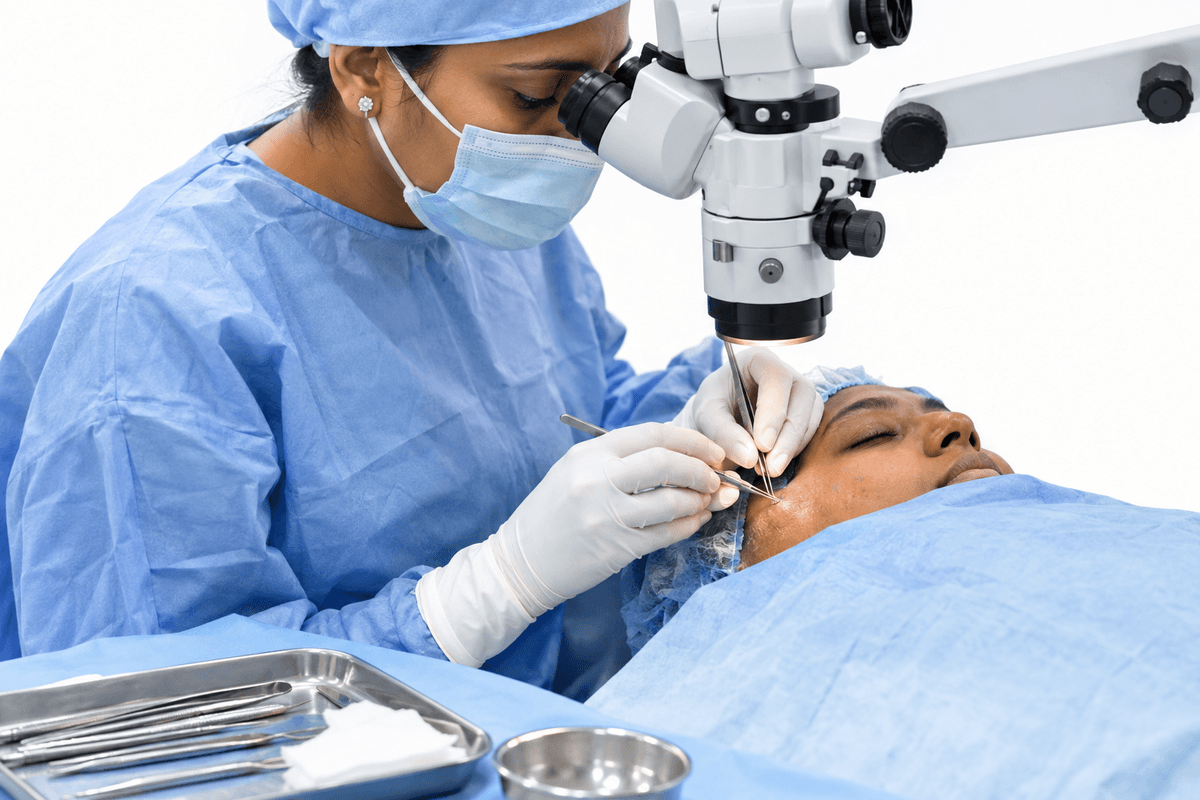
Performed by Dr. Ramanjanyalu at Dr Rams Skin Remediez
Dermato surgeries are minor surgical procedures performed on the skin to remove or treat various skin growths, lesions and conditions. These office-based procedures address moles, cysts, warts, skin tags, lipomas and certain skin cancers. Dr Ramanjanyalu performs these procedures at Dr Rams Skin Remediez using appropriate sterile techniques and local anaesthesia to ensure patient comfort.
We believe in honest, upfront disclosure so you can make an informed decision.
A step-by-step look at what happens during this procedure.
The dermatologist examines the skin lesion to determine its size, depth and characteristics, and selects the most appropriate surgical technique—such as excision, shave removal or punch biopsy.
A numbing medication is injected into the skin around the lesion to block pain signals. You remain awake but the area becomes numb within a few minutes.
Using sterile surgical instruments, the dermatologist carefully removes the growth. Depending on the technique, this may involve cutting out the lesion with a margin of healthy skin, shaving it off at the skin surface or using a circular blade to take a sample.
If the wound is deep or large, stitches may be placed to bring the skin edges together and promote healing. Smaller wounds may be left to heal on their own or covered with a dressing.
The removed tissue is often sent to a laboratory for microscopic examination to confirm the diagnosis and ensure complete removal if the lesion was abnormal.
A structured, patient-first approach from first consultation to full recovery.
Dr Ramanjanyalu examines the skin lesion, discusses your concerns and medical history, and explains which surgical approach is most suitable for your situation.
All dermato surgeries are performed using sterile instruments and appropriate infection-control measures to minimise the risk of complications.
You receive clear written and verbal instructions on wound care, signs of infection to watch for, activity restrictions and when to return for suture removal if needed.
A follow-up appointment is scheduled to check healing, remove stitches if placed, and review laboratory results to ensure the lesion was adequately treated.
What to expect at each stage of your recovery journey.
The wound is covered with a dressing. You may feel mild soreness once the anaesthesia wears off. Keep the area clean and dry as instructed. Most people resume normal activities the same day with some restrictions on heavy lifting or vigorous exercise.
Swelling and redness gradually decrease. Follow wound-care instructions carefully to prevent infection. Avoid soaking the wound in water until cleared by your doctor. Stitches may be removed during this period if used.
The wound continues to heal and the skin begins to remodel. Scarring becomes more apparent during this phase but will continue to fade over several months. Sun protection is important to prevent darkening of the scar.
The procedure aims to completely remove the targeted growth or lesion. In most cases this is achieved, but some deep or extensive lesions may require additional treatment if margins are incomplete.
For suspicious lesions, the procedure provides tissue for laboratory examination, which helps confirm the diagnosis and guide further care if needed.
All surgical procedures leave some degree of scarring. The size and visibility of the scar depend on the location, size of the lesion, your skin type and how your body heals. Scars typically fade over time but do not disappear completely.
Most benign lesions do not return after complete removal. However, some conditions such as certain types of warts or cysts may recur, and new lesions may develop elsewhere over time.
The right choice depends on your diagnosis, risks and circumstances — discussed with you at your consultation.
For benign-appearing lesions that are not bothersome, watching over time with periodic skin checks may be an option instead of immediate surgery. This approach is chosen when the growth shows no worrying features.
Freezing with liquid nitrogen can be used for certain superficial lesions like warts and some benign growths. It avoids cutting but may require multiple sessions and is not suitable for lesions that need tissue examination.
Energy-based devices can vaporise or destroy small skin lesions. These methods are typically used for benign lesions where tissue diagnosis is not required and may result in less scarring, though they do not provide a specimen for pathology.
Let's clear up some of the most common myths about dermato surgeries.
Get a personalised assessment from an experienced specialist. Understand your options, ask your questions, and decide with confidence.