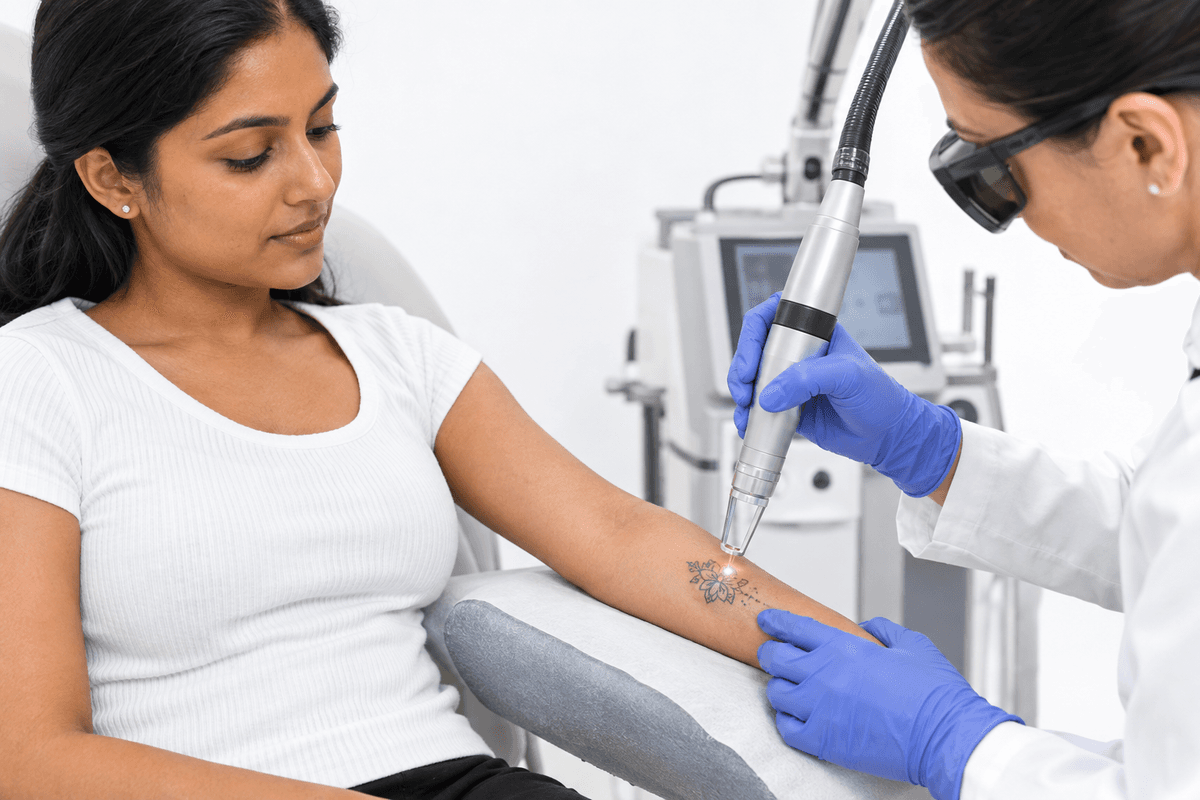
Performed by Dr. Ramanjanyalu at Dr Rams Skin Remediez
Tattoo Removal in Bengaluru has become increasingly sought-after as individuals seek to erase unwanted body art for personal, professional, or aesthetic reasons. Using state-of-the-art laser technology, the procedure breaks down tattoo ink particles beneath the skin, allowing the body to naturally eliminate them over multiple sessions. Dr Ramanjanyalu at Dr Rams Skin Remediez offers personalized tattoo removal treatments tailored to your skin type and tattoo characteristics.
We believe in honest, upfront disclosure so you can make an informed decision.
A step-by-step look at what happens during this procedure.
High-intensity laser beams are directed at the tattooed skin, with specific wavelengths targeting different ink colors. The laser energy passes through the skin without damaging surrounding tissue.
The laser pulses create a photoacoustic effect that shatters tattoo ink particles into microscopic fragments. Different laser wavelengths (Q-switched Nd:YAG, picosecond lasers) are selected based on ink color and depth.
Once fragmented, the body's lymphatic system recognizes these tiny ink particles as foreign substances. White blood cells are mobilized to the treatment area to begin the removal process.
Macrophages and other immune cells gradually absorb and transport the broken-down ink particles through the lymphatic system. The ink is then filtered through the liver and eliminated from the body naturally.
Over 6-8 weeks between sessions, the tattoo progressively lightens as more ink is eliminated. Multiple treatments are required as each session can only target a portion of the ink particles safely.
A structured, patient-first approach from first consultation to full recovery.
Dr Ramanjanyalu conducts a detailed assessment of your tattoo including size, color, age, and depth. A customized treatment plan is created based on your skin type (Fitzpatrick scale), ink characteristics, and desired outcomes.
Dr Rams Skin Remediez utilizes FDA-approved Q-switched and picosecond laser systems with multiple wavelengths to effectively target all ink colors. Settings are precisely calibrated to maximize ink breakdown while minimizing skin damage.
Topical anesthetic cream is applied 30-45 minutes before treatment to ensure comfort. Cooling devices are used during the procedure to reduce discomfort and protect the epidermis from thermal damage.
Detailed aftercare instructions are provided including wound care, sun protection, and follow-up scheduling. Our team monitors your healing progress and adjusts treatment parameters as needed for optimal results.
What to expect at each stage of your recovery journey.
The treated area will appear frosted white immediately after laser application, followed by redness and swelling within hours. Apply ice packs and prescribed ointments to reduce inflammation. Avoid touching or scratching the area.
Days 3-7 involve potential blistering, scabbing, or crusting as the skin repairs itself. Keep the area clean and dry, apply antibiotic ointment as directed, and allow scabs to fall off naturally. Avoid strenuous exercise and hot water exposure.
Weeks 2-8 allow the immune system to clear fragmented ink particles while skin continues regenerating. Protect the area from sun exposure with SPF 50+ sunscreen. Schedule your next session after 6-8 weeks for optimal results.
Most patients achieve 75-95% tattoo lightening after completing their full treatment series. Professional tattoos typically require 6-10 sessions, while amateur tattoos may clear in 3-6 sessions depending on ink depth and quality.
When performed by experienced dermatologists using appropriate laser settings, tattoo removal results in minimal to no scarring. Any pre-existing scarring from the original tattoo application typically remains unchanged.
Successful removal allows patients to move forward without the reminder of unwanted body art. Many report enhanced self-esteem, expanded career opportunities, and freedom to choose new designs on clear skin.
Black and dark blue inks respond best to laser treatment, while lighter colors like yellow, green, and fluorescent inks may be more challenging. Multi-colored tattoos require different laser wavelengths for comprehensive removal.
Let's clear up some of the most common myths about tattoo removal.
Get a personalised assessment from an experienced specialist. Understand your options, ask your questions, and decide with confidence.